


ActionLGBTQ
Jan - Mar 2017
Blogs and listicles for a queer media site

Coming Out to Your Christian Parents
actionlgbtq.com, Feb 2017
"I have it all planned out," says Gordon (name changed to protect the fabulous). We're sitting in an ice cream shop in San Diego, discussing his holiday vacation. He'll be flying back to his hometown, a small Southern locale. While he's there he'll be coming out to his family.
This is a daunting step for any member of the LGBTQ community. "It's a lot," Gordon says, "knowing that I have to say to these people who've known me my whole life, 'Hey, so there's this big, important part of my identity you know nothing about.'"
The average coming-out is hard enough. To compound that, Gordon's parents are Christian. Not just Christian, but Southern Baptist. And not just any Southern Baptists -- his father is a minister. They definitely DON'T approve of the gay lifestyle. "Funny enough, I think my dad will take it better than my mom," he tells me. He speaks with a slight southern accent that gets more pronounced as his attitude gets sassier. "He's at least used to talking to people about, quote unquote, 'shameful' aspects of their lives. My mom don't want anything to do with that."
Though he speaks about the situation casually, it's clear that Gordon is nervous. He knows he'll face judgment, and possibly even hostility. He's pretty sure he'll get a lecture about morals, plenty of denial, and possibly even threats of being disowned. These fears are what have caused Gordon to put off this conversation for years. Now he's in his early thirties, and his family still doesn't know.
"Well, I'm sure they KNOW," he corrects. "They've been pestering me to start a family since I graduated high school, but I've never even had a girlfriend? I'm positive they suspect. They just don't want to hear me say it. It's a very Southern Baptist thing to do, taking the undesirable problems, locking them in a drawer, and never speaking of them." He pauses, sipping his milkshake. "This is why we have shitty sex-ed programs."
Gordon's fears are similar to those of anyone coming out to their conservative, religious family. To be clear, coming out can be difficult for anyone, even those living with non-religious families in the most progressive areas in the country. After all, this is a deeply personal aspect of your life that you're confessing to people you love, and even if you know they'll accept you, there's always that lingering fear of rejection. But when your family lives by religious views that pound home the point that homosexuality is a sin, and that people who "choose" that path are unlean, confessing the truth about your sexuality becomes a much more daunting task. Even if you're not particularly close with your family, you still want them to accept you for who you are.
Despite the constant refrain from the religious right that homosexuality is a sin, the Holy Bible doesn't seem to have much to say on the matter. Of twelve verses that specifically reference homosexuality, nine of them are from the Old Testament -- and therefore, many Christians would argue, not binding since they were given to the nation of Israel before Jesus supposedly came to earth and died for everyone's sins. Jesus himself said nothing at all about homosexuality, at least not that is recorded in the gospels. All New Testament verses concerning it came from the letters of the apostle Paul.
Yet still, many Christians claim that homosexuality goes against God's will. But there are those who disagree. Evangelical pastor Mark Landry believes that Jesus would have welcomed the gay community with open arms. "The founder of [Christianity] traveled around the 1st century Judean outskirts rounding up everyone the religious elite had rejected," he says. "If Jesus were here today, there would be lots of gay people in his entourage." We all know that Jesus was infamous at the time for associating with outcasts. And if the water-to-wine incident was any indication, he certainly knew how to party as well. Would Jesus be the best friend of the LGBTQ community? Would he be out there with us, picketing for equality? Given how he shook up the ruling religious class at the time, he certainly seems like that kind of guy.
So if Jesus would accept you, sexuality and all, then your family should too, right? Of course they should. Will they? No one can say that for sure. One thing is certain: They love you, and it's true that love can help to overcome many prejudices. The following are steps you can take to help your coming-out go as smoothly as possible:
1.) Have a plan
What are you going to say? How will you address questions that your family will surely have? What will you do if you're met with hostility or, worst case scenario, they try to prevent you from leaving? While you can't predict exactly what will happen or account for every scenario, it's important to be as prepared as possible. Depending on what works best for you, this can include putting your speech in writing, as well as jotting down questions you think they'll ask and the answers you would give.
If you are being supported financially by your family in any way, and if you think that their reaction may involve withdrawal of that support, do your best beforehand to establish independence in any way you can. For example, if you're on their cell phone plan, switch to your own. If you live with them, make sure you're able to move out or stay with a friend if need be. If you are a student and they are paying for your tuition or living expenses, it may be best to wait until after you graduate to come out, if you expect hostility.
2.) Rehearse, rehearse, rehearse
This isn't a performance. This is your life. Nevertheless, it's important to be rehearsed and know your lines. This will be an emotional time for everyone, so staying on track is important if you want to fully get your point across. You know how people in movies practice big speeches in front of a mirror? Do that -- it works.
If you have a friend or loved one who you trust enough, try roleplaying with them acting as your family member. They may be able to anticipate reactions or questions that you may not think of beforehand. Sometimes a person who is outside the situation is able to see it from new and clearer angles. This insight can lead to valuable feedback.
If you're nervous or worried you won't remember everything you want to say, bring your notes with you. Reading a pre-prepared speech can also help discourage interruptions.
3.) Have an ally
Because this is a big and potentially life-changing step, it's important to have a support system in place. Whether it's a friend or a group of friends, having someone to talk to about the situation will be valuable both before and after you come out to your family. If you don't have a friend who you trust to act in this role, many local colleges or universities have LGBTQ alliances or support groups you can reach out to.
Let those who support you know when and where your coming out will be taking place. Arrange a time for a phone conversation or in-person meeting afterward if you need emotional support.
If you think your family may react in a hostile or violent way, arrange for your support person to call you at an appointed time or, worst case scenario, contact authorities.
4.) Choose a convenient time
This isn't a conversation to have right before you have to leave for work, or at a cousin's birthday party. Be sure to select a time that is ideal for everyone. You might choose a weekend or evening when more people tend to be relaxing. If you're worried about schedules clashing, reach out to the family members involved and schedule a time for dinner or "catching up," and make it clear that this is important to you.
If you worry about outbursts or violence, you might consider a public venue for your coming out. A restaurant or a park, where you can sit down and relax with people nearby, may be ideal. You know your family best, so choose what you think would be the safest and most comfortable option.
5.) Approach the subject carefully
Don't dance around the subject, but don't be flippant about it either. Some people tend to deal with intense emotions by joking or using humor to defuse a situation. Understand that this is probably a sensitive subject for your family, so approaching it with humor may not be the best option -- you don't want them to treat it as a joke, so you shouldn't either.
You'll want to make your point clearly, early on in the conversation. You might use a line such as, "I want to let you know that I'm [gay/bisexual/transgender]," or "I love you, and I want to share this aspect of my life with you -- I'm [gay/bisexual/transgender]." Ultimately, you should choose words that reflect your personality and your feelings -- after all, you're doing this because you want the ability to be yourself around your family.
6.) Answer questions honestly
Your family will most likely have questions for you. Some of them may be hurtful or offensive. It's important to be honest and open about your feelings so that your family can see that, yes, this is genuinely a part of you and how you feel. But remember that you do have the right to refuse to answer anything that makes you uncomfortable, and to let them know when you feel so.
Additionally, remember to listen. Some of their feelings may be based on aspects of your sexuality that they don't understand. Keep an open ear and an open mind to their concerns, and address them where you can.
7.) Remain calm, but don't take any abuse
There is no doubt that you will be emotional. You may cry, and you may feel hurt by their reaction. However, it's important not to react with anger or passive-aggression. If they become angry or abusive, do not sink to that level. Responding angrily to someone's anger can result in you being seen as the aggressor. Deep breathing, taking time to choose your words, and using "I" statements (such as "I feel hurt by that kind of language" instead of "I can't believe you would say that") can all help in maintaining your composure and keeping control of the situation.
Remember that this conversation is on your terms. If at any point you feel that the conversation has become abusive and can no longer lead to a positive conclusion, you have the power to end it. Tell your family that you understand they are emotional, but you would prefer to continue talking with them at a time when they are more calm. If you do choose to end the conversation, follow through with your statement and leave.
8.) Give them time
Your coming out may be shocking to your parents, and they may react negatively in the moment before they have time to think. Remember that, just because they don't accept your sexuality now, it doesn't mean that they never will. Some people need to go through the stages of reaction before they can reach a place of acceptance -- and this may include anger, denial and grief. You may want to direct them to resources, such as PFLAG which provides information and support for family members of LGBTQ individuals. However the conversation ends, be sure to let them know that you're open to future talks.
If your family was verbally abusive, and especially if you think they will continue to be so, remember that no one has the right to make you feel bad about your identity. You have made the effort to include them in your life, and if you feel that they will continue to be toxic and abusive, then you have the right to cut off contact. It's up to you to decide how much effort to put into convincing them to accept you.
Back at the ice cream parlor, Gordon outlines his plan for me. He'll be staying in his hometown until after New Year's. He plans to tell everyone after all the holiday celebrations are over. Typically he would stay at his parents' house in his old room. This time, though, he's booked a room at a motel a few miles away. "I just want to have a place to go in case it's bad," he says. He'll have a rental car, too, even though his mother's car is usually available for him to drive. When he breaks the news, his luggage will be packed and waiting in the trunk of the rental, just in case. "I honestly wouldn't put it past them to try to keep me there." His laugh sounds a little anxious. "They already think California is a bad influence on me. There's a good chance they'll blame this on the evil of the West Coast and try to reverse the brainwashing I've been exposed to out here." Then he goes in for a bit of bitter sarcasm. "Since, you know, this was a conscious decision and not a part of my identity or anything."
When we part, Gordon says he'll message me after the big reveal to let me know how it went. After New Year's, I wait to hear from him, but a week goes by and there's no word. I ask a mutual friend who's closer to him to reach out and make sure he's okay. I hear back almost immediately. Gordon is fine, our friend says. He never came out to his family, though. He said that the timing just never seemed right. Maybe next time.
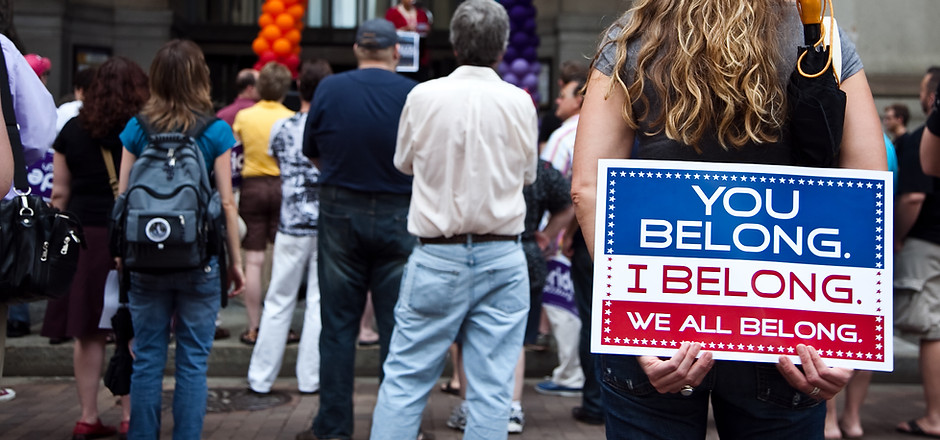
10 Gay Stereotypes That Need to Die
actionlgbtq.com, Mar 2017
The past few years have seen some great progress in terms of LGBTQ rights. Unfortunately, there are still some really damaging stereotypes holding the non-hetero population back. Here are a few we'd like to never see again.
1.) Gay men exist to give you fashion advice
A gay man with amazing fashion sense is a staple of pop culture. From *Queer Eye for the Straight Guy* to the token gay bff (more on that later) who doesn't hesitate when to tell you that you look like a hot mess, the mainstream media seems to have this idea that dudes who like other dudes also have a serious thing for Coach leather goods and cheerily-patterned pocket squares. This is not only insulting to gay men who would rather just show up in their cargo shorts and sweatshirt (I mean, be true to yourself, right?); it also makes assumptions about any man who has good fashion sense -- and there are many straight men who know how to dress well (we're looking at you, Jon Hamm).
2.) Butch lesbians - basically truckers with boobs
Short hair, flannel shirt, excessive body hair -- everything "feminine" (besides the anatomy) is absent from the well-known butch lesbian stereotype. You can't tell if she hates men or wants to be one, but she can probably pound you into the ground if she doesn't like the way you look at her. In fact, she probably moonlights as a bouncer. Newsflash: Chopping off your hair and enjoying the feel of a well-worn flannel shirt doesn't rob you of your femininity.
3.) The "confused" bisexual
We get frustrated every time we come across one of those people who thinks that bisexuality isn't a thing, and that everyone who identifies as bisexual either doesn't want to admit they're fully gay, or just enjoys making out with their friends to get attention. When did being open enough to love someone regardless of their gender become a bad thing? Because we think that sounds pretty great. So feel free to roll your eyes the next time your grandma says that your bisexual cousin is "just going through a phase."
4.) The token gay bff
Who hasn't wanted that sassy, flamboyant best friend who pipes up with a well-placed burn on that lady who cut in front of you in line at Starbucks? Or the one who makes you go out to the club when you have a broken heart? Honey, we have something to tell you: A gay man is not a pet. Period.
5.) The promiscuous gay
Of course, it's perfectly find to engage in (safe) sex with multiple partners. No slut-shaming here. What's NOT okay is the idea that gay men hound after anything with male anatomy. Of course, this idea probably exists because of the combination a straight man's ego and his fear of being hit on by another man. Fortunately (surprise surprise) gay guys are like any other guy -- they'll probably flirt with someone they're attracted to, but that absolutely does not mean they'll flirt with anything sporting a pair of family jewels. The next item on our list is somewhat related...
6.) The lesbian who's trying to seduce you
Here's the female counterpart to #5. Every college campus has one. Her mission is to "turn" straight women by getting them into her bed. Unfortunately for male fantasies everywhere, the vast majority of lesbians (yes, even the "hot" ones) don't get off on seducing straight women, and would rather sleep with people who are interested in them -- e.g. other lesbians.
7.) All gay men are effeminate
It's true that some non-hetero men have mannerisms or tastes that are more traditionally "feminine". And while we're all about embracing your feminine side (seriously, everyone should), not all gay men do. Some gay men like to work on cars. Some of them like a good game of golf, or to hang out at Buffalo Wild Wings to catch the playoff game. Some of them work at a factory during the week and go fishing on the weekends. Some of them do all of those things, and then binge watch *Sex and the City* while polishing off a pint of triple chocolate chunk ice cream. All of that and any of that is okay. As much as media would like it to be that way, gay men don't always fit perfectly into a cookie-cutter persona.
8.) Masculine gay men are more respectable
Gay men who are more traditionally masculine, for some weird reason, seem to get more respect from people who expect non-hetero men to behave a certain way. "But you don't SEEM gay?" This is like the homosexual version of telling an African-American how well-spoken they are. It's weirdly meant as a compliment, but really just says that you're surprised how "normal" that person seems.
9.) In a gay relationship, one person "wears the pants"
We imagine that any gay person in a committed relationship probably loathes the question, "which one of you wears the pants?" We get what that question means -- which of you is in the traditional male role, and which of you is in the traditional female role? Not only is that question completely inappropriate, but it undermines a couple's desire to share responsibilities in a way that suits them, rather than in a way that fits into established norms.
10.) Being gay is a choice
Most people know better by now, but unfortunately there are still folks out there who believe that it's a choice to love someone who has the same reproductive organs. Straight people never made a choice to be straight -- so why would it be any different in the homosexual realm? Love is love. The sooner the rest of the world realizes it, the sooner we'll all live in a much happier place.

Top 10 Gay Vacation Spots for 2017
actionlgbtq.com, Jan 2017
If the new year has given you a bit of a travel bug (in addition to that cold you've been trying to get over), well, now we're going to make it worse. These gay-friendly vacation spots will make you want to dig out your swimsuit and hop on an airplane immediately.
10.) Orlando, FL, USA
Between Disney World's Gay Days and a stunning array of night clubs, Orlando has long been a world-famous destination for the non-hetero population. Last year's tragic attack on the Pulse nightclub has only served to strengthen the wonderful community there, and after a deserved pause, the city's gay nightlife is back in full force. Days wearing rainbow Mickey ears and nights dancing our butts off? Sign us up!
9.) Manuel Antonio, Costa Rica
American jet-setters have long regarded Costa Rica as a vacation spot where you can get a whole lot of bang for your buck. This affordable destination is a favorite of hikers and lovers of the outdoors -- and Manuel Antonia just happens to have a semi-private gay beach (Playita Beach) if you just feel like lounging in the sun. Gay-friendly hotels mean that you can really relax in this seaside locale. Lush, tropical, wallet-friendly — what more could you wish for?
8.) San Sebastian, Spain
If your vacations are less about partying and more about culture, may we recommend this hidden gem? Voted 2016's European Capital of Culture, San Sebastian is brimming with arts, music and mouth-watering cuisine. This city boasts an astounding 34 Michelin-star restaurants -- a factoid you can sink your teeth into. With the charm of a Spanish countryside town and the refined attitude of a much bigger city, San Sebastian is a destination we dare you not to fall in love with.
7.) Stockholm, Sweden
It's got history. It's got progressive social policies. It's got ABBA. Stockholm is basically a gay traveler's best friend. Whether you love a museum, an architectural tour or a hike through the most mind-blowing landscapes you've ever seen, you're sure to find something in this lovely city to capture your heart. And we've all heard about the legendary beauty of Sweden's people. Eye candy? Yes, please!
6.) Sydney, Australia
Whether you're visiting the world-famous opera house, making the nerve wracking hike up the Sydney Harbor bridge, or relaxing on one of the city's 6 gay beaches, the LGBTQ-friendly destination is one you won't soon forget. If stories of its sometimes-terrifying wildlife have deterred you in the past, throw caution to the wind and let yourself be pampered in one of its many resort hotels -- or even go in for a little nude sunbathing at Obelisk Beach. Give it a chance, and you may never want to come back from the outback.
5.) Ireland
2017 marks the second full year for marriage equality in Ireland -- a big stride for the famously Catholic nation. But this isn't the only reason for you to visit the Emerald Isle this year. The bustling gay scene in Dublin, including clubs, saunas and gay-friendly hotels, is second only to the island country's lush cliffs and moors. Whether you want to immerse yourself in its rich history or party it up in the big city, you're sure to feel pretty lucky indeed if you choose Ireland for your destination.
4.) Fire Island, NY, USA
This famous LGBTQ destination boasts gay-friendly shopping, hotels, vacation rentals and -- of course -- a nightlife you'll never forget. Known by many as the ultimate gay vacation experience, its nude beaches and lively events attract non-hetero folk from around the world. If you feel like turning up the heat on your next vacation, Fire Island is most definitely the place to do it.
3.) Rio de Janeiro, Brazil
After last year's Olympic games, the heat has cooled a little in Rio. That makes 2017 the perfect time to visit this iconic party destination. With the Brazilian real currently at $0.31 USD, this vacation has the potential to be a glamorous dream-come-true getaway for a fraction of the price you'd expect. Between the gorgeous sandy beaches and unrivaled nightlife, this vacation can be as busy or as relaxing as you wish. That stereotype of Brazilians knowing how to party? Prepare to find out how true it is.
2.) Phuket, Thailand
Welcome to Thailand, where the Gender Equality Act protects LGBT citizens and tourists. This gorgeous Buddhist nation not only boasts jaw-dropping landscapes and a stunning array of wildlife -- in Phuket, it's also home to gay night clubs, saunas, a gorgeous gay beach, and your fill of cabaret drag shows. This Southeast Asian locale is the perfect destination if you need a gay-friendly dose of island splendor.
1.) Miami Beach, FL, USA
Our #1 spot just has to go to South Beach. Whether you're indulging your inner foodie on Ocean Drive or partying it up in one of the area's many gay clubs, Miami Beach is the perfect place to go for your fix of fun, sun and sand. Uber over to Haulover Beach if you feel like sunbathing in the buff, or time your vacation just right so you can attend the Winter Party, North America's biggest gay beach party. LGBTQ folks have been singing Miami Beach's praises for years -- it's time for you to learn why.